Transform your utility operations with intelligent monitoring that drives efficiency, compliance, and future-ready infrastructure.
Managed Sensors combines intelligent field sensors, secure connectivity and a fully managed service to give utility companies real-time visibility of critical assets. By collecting, monitoring and reporting millions of data points, it helps organisations improve compliance, reduce risk and make faster, more informed decisions.

Measure clean water quality, evaluating indicators such as pH, turbidity, chlorine, pressure, and temperature.
Keep an eye on sewer levels, flows, and blockages to mitigate the risks of overflows.
Track pressure at water mains to immediately detect and act on major trunk leakages.
Monitor the health of your assets and inform timely predictive maintenance with vibration monitoring.
Evaluate environmental impact using data on river water quality, abstracts, soil, and boreholes.
Track pressure in pipes to protect assets, reduce leaks, and ensure you meet compliance standards.
Our pioneering trial with Anglian Water achieved 97%+ connectivity, enabled 15-minute water quality monitoring, and delivered a 7x improvement in battery performance, creating a scalable foundation for intelligent water networks.

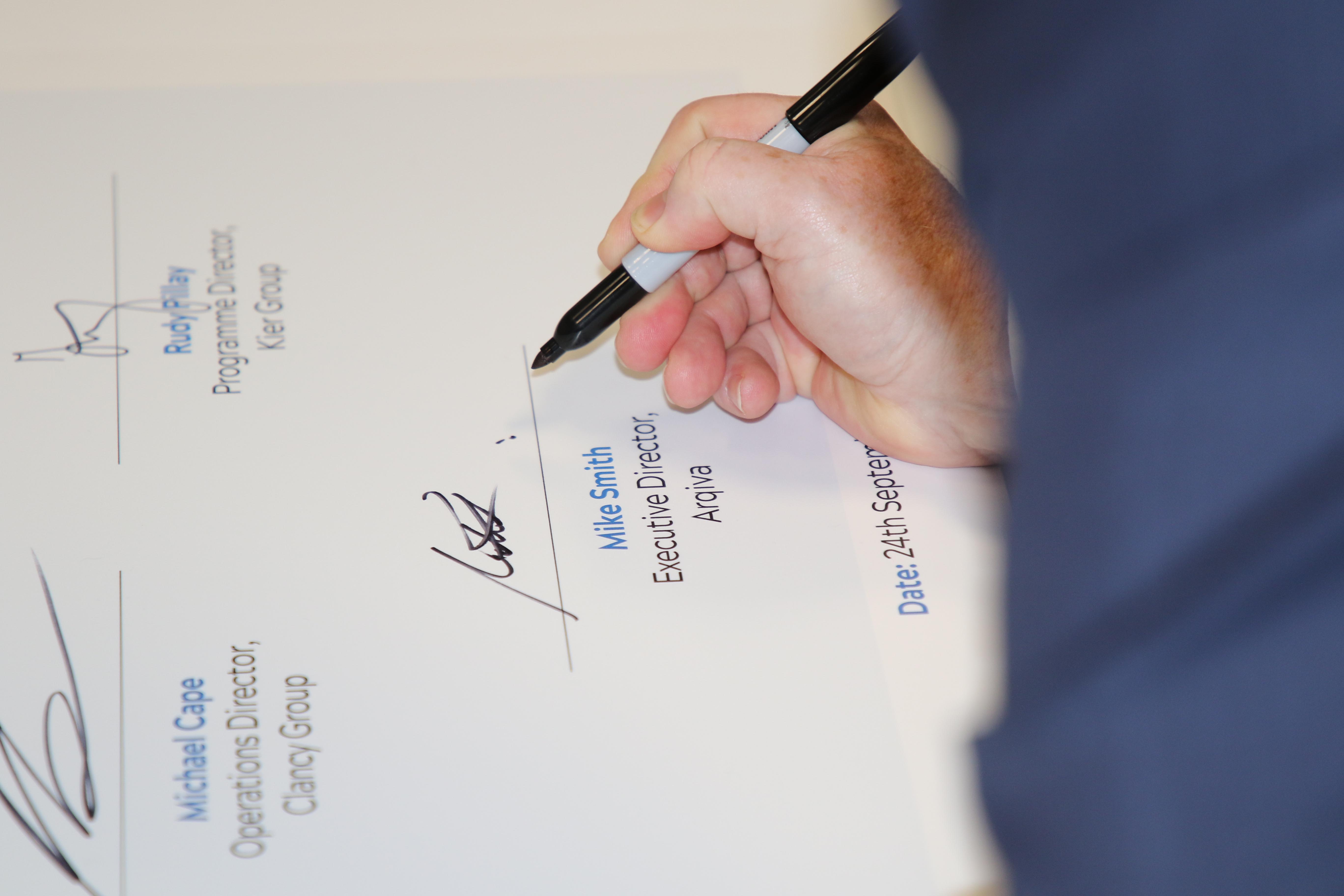
Anglian Water: paving the way for a resilient future Discover how strategic partnerships and advanced connectivity are reducing leakage and preparing Anglian Water for long-term water sustainability. Get the whitepaper Get the whitepaper Anglian Water faces one of the toughest water resource challenges in the UK. Without any action, the company is forecast to face a shortfall of 593 megalitres of water per day by 2050, roughly half of the water currently supplied across its network. Operating in the driest region of England, Anglian Water has very limited surplus water available to meet future demand. The company also faces tight environmental regulations that restrict how much water it can take from natural sources, and there are few opportunities to trade or share water with neighbouring regions. With supply-side options so constrained, Anglian Water has to make the most of the water it already has, improving efficiency, reducing leakage, and helping customers use less water. Recognising that incremental improvements would never match the scale of the challenge, Anglian Water set out early to pursue a scalable, data-driven approach to managing demand and building long-term resilience. Solution Laying the foundations in AMP5–AMP6 This forward-looking approach began to take shape more than a decade ago, when Anglian Water first explored how advanced metering infrastructure (AMI) could transform the way it managed water resources. An early industry pioneer, the company identified smart water metering as the key to achieving that transformation, providing the data and insight needed to detect leaks faster, engage customers directly in water efficiency, and build a stronger, more sustainable network. The idea was rooted in customer focus. As Doug Spencer, Anglian Water’s Smart Metering Lead, reflected: “It really all started back in AMP5 with Louise Mitcham. The first Head of Metering, Louise’s background was customer service through and through, and she made sure the vision for smart metering was all about the customer.” Doug Spencer Smart Metering Lead, Anglian Water That philosophy shaped Anglian Water’s early proof-of-concept trials during AMP6 in Newmarket, Colchester, and Norwich. These trials weren’t about testing technology. They were a chance to prove how smarter data could drive real customer engagement and more informed conversations about water use. Working with Arqiva and Sensus, Anglian Water tested the potential of smart metering across different topographical settings using Arqiva’s FlexNet private radio network (412–414 MHz), a secure and reliable protocol capable of transmitting high-quality data at scale. The results were clear: the technology worked, the data was accurate, and the partnership aligned in ambition, expertise, and values to support Anglian Water’s customer engagement programme. Scaling up in AMP7 Building on the success of those trials, and following another successful procurement process, AMP7 (2020–2025) marked the shift from concept to full-scale implementation. Anglian Water and Arqiva launched one of the most ambitious smart metering programmes in the UK, installing 1.1 million smart meters across the region. From the outset, the programme aimed high. The goal was to deliver what the team proudly called a “Rolls Royce” AMI system, not just a functional rollout, but an industry-leading platform for performance and reliability. Targets included 97% customer coverage, 99% of meters connected, and 95% of those meters delivering at least 22 reads per day. Even in the face of major challenges, from Covid-19 lockdowns to global microchip shortages and supply chain disruption, the partnership held firm. As Lindsay Congreve, Anglian Water’s Head of Metering, observed, “The relationship weathered the storm because, at an operational level, we’ve always had the same aim. From the outset, Arqiva made it absolutely clear how committed they were to delivering our vision.” Lindsay Congreve Head of Metering, Anglian Water Deployment was planned zone by zone, ensuring strong operational control and clear, proactive communication with customers. This careful sequencing kept communities informed and interested, supporting strong technical delivery while improving the overall customer experience and engagement. The approach supported the company’s wider ambition to be a top performer in the Customer Measure of Experience (C-MeX) league table. Strengthening the partnership As the rollout progressed, the collaboration between Anglian Water and Arqiva deepened further. As Doug Spencer noted, “We found through the proof-of-concept trials that everything was a good fit. We shared the same vision for how it should be delivered — and that’s continued throughout. Arqiva has always been receptive, and it’s been a genuinely award-winning partnership.” Doug Spencer Smart Metering Lead, Anglian Water Strong relationships at all levels helped maintain quality and consistency. For Anglian Water, Arqiva’s Customer Success Manager has been integral, as someone who “knows every part of the operation and everyone involved,” while the appointment of an Account Director with a deep background in the water industry brought vital context and continuity. Across four consecutive procurements, Anglian Water found that Arqiva consistently offered the best balance of economic performance and confidence in achieving the company’s ambitious KPI targets, a testament to both technical excellence and shared long-term commitment. Rolling out through AMP8 Following another successful procurement cycle, the focus in AMP8 is on further expansion and optimisation. A further 1.2 million smart meters are set to be installed across the region by 2030, delivered through the same proven alliance model with Kier Group and Clancy that has driven the programme’s success to date. With stable technology, experienced delivery teams, and a mature operational setup, Anglian Water has transitioned from rapid rollout to refinement. As Doug Spencer says, “It feels like we’ve flicked a switch. We’re no longer scrambling to get meters in — we’re now focused on what’s working, what’s not, and how we can keep improving.” Doug Spencer Smart Metering Lead, Anglian Water From early trials to a regional-scale rollout, Anglian Water and Arqiva have built an enduring partnership that continues to set new standards for smart metering in the UK. Together, they are proving how technology, collaboration, and customer focus can come together to deliver lasting value — for people, for water, and for the environment. Results Transforming customer engagement through data A key element of Anglian Water’s smart metering rollout has been the creation of a customer portal, giving households direct access to their own water-use data. This visibility has helped customers understand their consumption patterns and encouraged them to make positive changes. The portal also enables personalised “nudges” and advice, helping people reduce water waste and manage their bills more effectively. As Lindsay Congreve explained, 1.5m Smart water meters 150m+ validated data reads per day 577k+ customer‑side continuous flows 700k+ customer leaks detected 23megalitres of water per day reduction in distribution output 100% Evidence‑backed reporting “We’re getting in touch with hints, tips, and updates on how their consumption is going. So, they’re hearing so much more from us than previously when the annual bill might be all a customer would see.” Lindsay Congreve Head of Metering, Anglian Water This more transparent, data-driven relationship has had a measurable impact on trust. A recent customer engagement study found that trust in Anglian Water is 15% higher among customers with a smart meter compared to those without, largely because these customers have been directly supported to fix leaks and save money through improved water efficiency. What’s more, the programme has delivered a material uplift in customer satisfaction (C-MeX). Among customers with a smart meter, below stats indicates what our customers are saying: 52% say they trust Anglian Water 43% agree that Anglian Water offers good value for money, compared with 29% of customers without a meter “We’ve been amazed by the number of customers engaging with us at a really good level. We get a lot of very positive testimonials from our customers.” Lindsay Congreve Head of Metering, Anglian Water Tackling customer-side leakage at scale Smart water metering has delivered a step change in Anglian Water’s ability to identify and respond to customer-side leaks. Since April 2021, Anglian Water’s smart water meters have identified 577,410 continuous flows. In 2024 alone, the company handled over 170,000 continuous flow identifications, compared with around 9,000 a year before AMI metering, a transformation Doug Spencer describes as “a paradigm shift.” With 1.5 million AMI meters connected and operational, Anglian Water now has the largest operational smart metering base in the UK water industry. The data gathered has far exceeded expectations, both in scale and in impact. As Doug Spencer revealed, “Certainly, the magnitude of customer-side losses has completely surpassed our estimates. We thought we had a pretty good handle on performance from our proof-of-concept trials, but we’ve had to double the resource to deal with customer leaks because it’s proved such a gigantic piece of work.” Doug Spencer Smart Metering Lead, Anglian Water The results have been worth the effort. The company is now ahead of schedule on its AMP8 leakage reduction targets. By January 2026, it had delivered an average reduction of 14.75 litres per household per day across customer supply-pipe leakage and public leakage—exceeding the WRMP target of 11.28 litres per household per day. This improvement equates to a 20 million litre per day reduction in distribution input, reducing overall demand on the network and strengthening resilience. As Doug Spencer notes, “We’re almost at a point where we’re in touching distance of our target for the end of AMP8 for plumbing loss and service pipe leak reduction.” Doug Spencer Smart Metering Lead, Anglian Water Extending benefits beyond households While the majority of installations have focused on domestic customers, Anglian Water is also extending the benefits of smart metering to non-household and commercial properties. With around 105,000 business premises in its region, the company is now introducing water efficiency visits and outreach programmes to help businesses use data to save water and money. One initiative with Anglian Water’s schools outreach team has shown particular promise. As Doug Spencer explained, “There’s a huge difference between going to a school with an AMI meter and going to one without. With an AMI meter, the students can find issues, fix them, and then see the data come down — it’s real, immediate learning.” Doug Spencer Smart Metering Lead, Anglian Water Testing tariff innovation The data and flexibility provided by AMI technology have also enabled Anglian Water to trial new tariff models for the first time. A seasonal tariff pilot offers lower water prices in winter and higher prices in summer, encouraging customers to reduce discretionary water use — such as car washing or garden watering — during peak demand periods. As Lindsay Congreve shared, “That simply wouldn’t be possible without AMI metering. The savings on that initiative have been very, very significant, and you can see customers reacting and responding by using less water.” Lindsay Congreve Head of Metering, Anglian Water Supporting broader water resource management Smart water metering is now central to Anglian’s Water Resources Management Plan (WRMP). The availability of precise, real-time consumption data has transformed the company’s ability to forecast, plan, and manage water demand. Doug Spencer observed, “Our WRMP has really evolved. Now we’re working with actual data rather than estimates. We can more clearly understand where and why figures diverge from our original assumptions. When we see high district meter readings, we can now say, ‘Don’t bother sweeping — we know it’s these specific properties that are affected.’ In DMAs where we’d have suspected leaks in the past, we can now tell that high consumption is genuine use, not leakage. It’s making our operations much more efficient and effective.” Doug Spencer Smart Metering Lead, Anglian Water Building for the future The benefits of Anglian Water’s investment in FlexNet® connectivity are now extending well beyond metering. The company is exploring new applications for the network, including district meter monitoring, pressure management, and water quality programmes. Doug Spencer noted, “Using FlexNet could seriously drive down communication costs and simplify our hardware. For example, a FlexNet endpoint is much cheaper than an SMS logger, so the potential savings are significant.” Doug Spencer Smart Metering Lead, Anglian Water These innovations demonstrate how Anglian Water continues to leverage its smart metering infrastructure as a strategic platform for efficiency, resilience, and environmental benefit. “We’ve got a myriad of irons in the fire. We’re working across teams to make the most of what this network can do.” Doug Spencer Smart Metering Lead, Anglian Water Lasting impact The results of Anglian Water’s partnership with Arqiva are now being felt across every part of the business, from leakage management and customer engagement to operational planning and innovation. The scale of data insight delivered by smart metering is helping Anglian Water manage demand more intelligently, improve customer trust, strengthen its network for the future, and deliver stronger regulatory outcomes. Anglian Water has reviewed its current performance against Ofwat’s smart metering Performance Commitment Deliverables (PCDs) and, ahead of formal reporting from 2026/27, is confident it will exceed its target. By using technology to make better use of its precious resources, Anglian Water is securing a more sustainable and resilient water future for the East of England. Smart Water Metering Find out how the UK’s leading smart water meter provider can help you improve operations, conservation and the customer experience in one seamless, fully-managed solution. Read more Read more Find out More Find out More

Investing in smart metering to close London’s water gap with Thames Water Explore how Thames Water reduced consumption, minimised wastage, and shifted to data-driven operations with the power of smart water metering. Get the whitepaper Get the whitepaper The investment case: confronting a systemic challenge London is not supposed to run out of water. Yet beneath the surface of the capital’s daily life, the morning showers, the office towers, the restaurants, the hospitals, a quieter story has been unfolding. Demand is rising. Rainfall is becoming less predictable. Rivers and reservoirs are under mounting strain. And by the middle of the next decade, the gap between the water London needs and the water available to supply it is projected to widen dramatically. Forecasts point to a deficit of 326 megalitres per day by 2045. For a global capital, that is not a marginal shortfall; it is a structural imbalance. Thames Water has warned that if supplies were to fail, the economic cost to London could reach £500 million per day. In a region officially classified as being in severe water stress, and already operating under compulsory metering powers, parts of the supply area have begun to slip into deficit earlier than expected, driven by higher demand and continued pressures resulting from continued network leakage. This is not the result of a single dry year. It is the cumulative effect of population growth, climate volatility and tightening environmental constraints. The system was designed for a different era, one with more predictable rainfall and lower consumption. Today, the margin for error is shrinking. For Thames Water, the conclusion has become unavoidable: The challenge is now systemic The problem has moved beyond fine‑tuning supply operations to addressing a fundamental mismatch between current water usage and what can be sustainably provided. Regulatory pressure is increasing Oversight from regulators has intensified, demanding more transparent performance and stronger long‑term planning. Consumption targets are tightening National expectations for reduced water use are becoming more stringent, raising the bar for both utilities and consumers. The economic cost of inaction is clear Delayed investment or insufficient intervention now carries significant financial risk, making proactive change essential. And London is not alone. Across England and Wales, water companies are facing the same convergence of pressures. Many operate in areas classified as serious or severe water stress. The task confronting the sector is no longer incremental efficiency improvement; it is demand transformation at scale. In that context, smart water metering has shifted from a technological upgrade to a strategic lever. It is one of the few tools capable of reshaping consumption patterns across millions of households, identifying leaks faster, providing real-time insight, and enabling more targeted interventions. In a water-stressed future, visibility is power. And without it, the imbalance only grows. National mandates with local consequences That pressure is now being codified into national policy. Consumption cannot simply stabilise; it must fall. Targets require average use to drop to 122 litres per person per day by 2038, and to 110 litres by 2050. At the same time, regulators are tightening expectations on leakage performance with each successive price review, narrowing the tolerance for underperformance. For Thames Water, the implications are profound. Internal modelling shows that reaching 110 litres per person per day would require household consumption to fall by more than 300 megalitres per day between 2025 and 2050 — more than twice the levels of reductions assumed in earlier plans. This is a step change in how water is used across millions of homes. At the same time, leakage remains high. Current levels sit at around 575 megalitres per day on a dry-year equivalent basis, above forecast expectations. Historically, Thames Water have reported that as much as 28% of total leakage can be attributed to customer-side losses, water escaping from supply pipes and plumbing within domestic and commercial properties rather than from the company’s own mains. Achieving future supply–demand balance will depend not only on mains renewal and operational improvements, but also on tackling losses beyond the utility’s direct network control. Even with continued investment in network repair and renewal, the scale of customer-side leakage highlights how finely balanced — and system-wide — the challenge has become. In this environment, broad-brush awareness campaigns and incremental nudges cannot deliver the transformation required. Reducing demand and tackling wastage at this scale demands granular, property-level insight — the ability to see how water is being used, where it is being lost, and how patterns shift over time. It is within this tightening policy and performance landscape that smart metering moved from being an efficiency initiative to becoming a strategic necessity. A decade of operational learning Over the past ten years, Thames Water, in partnership with Arqiva, has installed more than 1.2 million smart meters, creating one of the most extensive advanced metering infrastructures in the UK if not the world. The rollout, delivered borough by borough across London, combined meter installation with the communications backbone required to capture hourly consumption data, and for many larger meters, data at fifteen-minute intervals. Supported by Arqiva’s 119 radio masts and a dedicated FlexNet network architecture, with meters provided by Sensus, the programme has enabled consistent, granular visibility of demand. This visibility has fundamentally changed how the company understands its network. With accurate household usage data, Thames Water can calculate area-level supply volumes, subtract verified consumption and identify leakage with far greater precision. What was once estimated at an aggregate level can now be isolated to street or property level. “I’m proud of the measurable impact we’ve had on water efficiency and customer satisfaction.” Mark Cooper Head of Smart Metering and Demand Reduction at Thames Water The measurable impact is clear. Smart meters have helped identify more than 84,000 customer-side leaks and are contributing to savings of around 120 megalitres of water per day. Beyond these headline figures, the programme has generated deep operational experience and valuable behavioural insight. Results Smart meter data has transformed Thames Water’s understanding of how water is used — and lost — at the property level. Analysis during AMP7 showed that between 8% and 10% of homes exhibited continuous flow, typically indicating hidden leaks, while around 5% of properties were estimated to have constantly leaking toilets. These are losses that, without smart water meters, could have remained invisible. The shift from unmeasured to smart-metered supply has delivered measurable demand reduction. During AMP6 and AMP7, Thames Water reported that customers reduced their consumption by an average of 13% once smart metered. As smart meter penetration increased, per capita consumption across the region fell materially, with measured household consumption typically around 15–20 litres per person per day lower than unmeasured consumption. Leakage reduction has also accelerated over successive regulatory periods. In AMP6, Thames Water reduced leakage by approximately 90-100 Ml/d from its early-period baseline. In AMP7, despite drought and operational pressures, reported leakage levels fell to their lowest ever recorded levels by 2023–24, representing a reduction of approximately 10% against the PR19 baseline. 84,000+ Customer-side leaks identified 13.2% Leakage down since 2020 1.2m+ Smart meters installed 98.5% Connectivity realibility 13% consumption reduction by customer once smart metered 100% Evidence‑backed reporting Leakage is at its lowest ever level on the network, down 13.2% since 2020. Smart metering has been central to this trajectory, enabling faster identification of supply-pipe leaks, improving night-flow analytics, and allowing targeted customer contact where continuous flow is detected. The system-level insight is equally important. Peak demand in several planning zones is strongly influenced by summer weather and dry-year conditions. In response, Thames Water is increasingly using smart meter data to identify high-usage and continuous-flow households, targeting these properties through enhanced water-efficiency initiatives. Without granular, near real-time data, transmitted across Arqiva’s network with consistently high reliability and connectivity of around 98.5%, unusual spikes in property-level water use would be absorbed into aggregate demand figures, detectable only in retrospect. With smart water visibility and granularity, Thames Water can isolate emerging pressure points, model peak risk with far greater precision, and anticipate strain before it escalates. Intervention becomes targeted rather than reactive, focused where it will deliver the greatest operational and customer impact. Always-on visibility enables earlier leak detection, faster intervention and more informed customer engagement. For a network operating under structural pressure, that intelligence is fundamental to resilience. Scaling ambition for AMP8 Smart metering now sits at the centre of Thames Water’s AMP8 plans. The company intends to reach one million additional homes with smart meters by 2030 and three million by 2035. Ofwat’s PR24 Final Determination reflects regulatory support for this approach, allowing £281 million for smart metering investment between 2025 and 2030. As Thames Water expands its rollout into Thames Valley, introducing NB-IoT cellular connectivity alongside the established FlexNet radio infrastructure, Arqiva’s Water Data Platform provides the foundation for real-time network visibility, proactive maintenance insight and robust regulatory reporting. Crucially, it integrates data from multiple network communication into a single, coherent environment, creating a comprehensive view of performance and emerging risk. Looking ahead, that same data architecture opens the door to richer digital engagement with consumers, smarter predictive maintenance insights that adapt to environmental change, and unified sensor data that delivers actionable operational insights. Partnership as a foundation for resilience The longevity of the programme has been central to its success. More than a decade of deployment has allowed Thames Water to mature its operational capabilities and embed data-driven decision-making into everyday processes. Arqiva’s role within that journey reflects more than technology provision. As a fellow critical national infrastructure operator, Arqiva understands the regulatory, operational and resilience challenges that water companies face. Maximum read accuracy and reliability are not abstract performance metrics; they are foundational to building a granular, trustworthy view of demand, leakage and system stress. Arqiva’s reliability has been underpinned by private spectrum FlexNet radio connectivity designed to operate across complex urban environments and at challenging underground meter depths. The ability to maintain robust performance in dense cityscapes, suburban environments and buried installations is essential to sustaining the integrity of the data estate at scale. Strong collaboration across suppliers, technology partners and internal teams has ensured the programme has delivered not only installation scale but long-term operability and resilience. As Mark Cooper reflects: “Strong partnerships are vital to the successful rollout and long-term operation of smart meters. Collaboration across suppliers, technology providers, and internal teams ensures resilience and efficiency throughout the programme.” Mark Cooper Head of Smart Metering and Demand Reduction at Thames Water Maintaining meter operability and network performance will be essential as new performance commitments take effect during AMP8. For Thames Water — and increasingly for other companies operating in water-stressed regions — resilient data infrastructure is becoming as critical as physical asset resilience. From measurement to structural transformation The projected 326 megalitre daily deficit, and the economic exposure attached to it, made the investment case for smart metering unavoidable. For Thames Water, smart meters are no longer a billing enhancement or a contained pilot initiative. They are a core system management tool: distinguishing genuine consumption from leakage, identifying continuous flow that may signal hidden customer-side leaks, and enabling intervention at property level before losses compound. Through AMP7, Thames Water has expanded its use of smart meter data to trigger Smarter Home Visits, provide digital consumption feedback, and to notify customers promptly when persistent flow suggests leakage or wastage. This data-led targeting will continue into AMP8, with smart meter analytics guiding engagement with excessive users and shaping more focused demand-reduction campaigns. Rather than broad awareness messaging alone, interventions are increasingly directed where the data indicates the greatest potential impact. Arqiva has been part of that transformation from the outset. For more than a decade, the partnership has evolved from early deployment to large-scale rollout, building the communications and data foundations that now underpin Thames Water’s demand strategy. And as the programme progresses toward 2030, that role continues, supporting expansion, performance optimisation and the long-term resilience of the platform. Across the UK water sector, similar pressures are intensifying. Climate variability, regulatory tightening and population growth are reshaping the supply–demand balance. The lesson is becoming clear: in a water-stressed future, visibility is not optional. It is the foundation on which resilience is built. Smart Water Metering Find out how the UK’s leading smart water meter provider can help you improve operations, conservation and the customer experience in one seamless, fully-managed solution. Read more Read more Find out More Find out More

.jpeg)

7 questions you should ask your suppliers With AMP8 procurement discussions intensifying, making the right supplier decisions is crucial. How can you be certain your smart water metering partnerships will pay off in the future? Here are some critical questions to ask your potential suppliers in your procurement processes. Get the whitepaper Get the whitepaper What’s the cost-per-successful read? Upfront costs can be an unhelpful measure for smart water metering provider comparison. That’s because lower upfront costs can lead to higher in-life costs, either from remedial actions to source the meter reads or shorter than anticipated battery lives. Whole-life cost is a better measure for comparison – but sometimes it also presents challenges. In some cases, suppliers’ whole-life costs are estimates based on test conditions, rather than lived experience in a real-world setting. Both upfront costs and whole-life costs can overlook an important factor – meter read success rate. While Solution A could be half the price of Solution B, if it only captures half the readings, then it’s not a bargain. The best way to compare providers on cost? Cost-per-successful read. This comparison tells you exactly what you’ll be paying for the true value of your asset – accurate, reliable data. It also provides strong insight into the quality of the supplier’s connectivity infrastructure and data transmissions. Some suppliers are now open to contracting on a cost-per-successful read basis, so make sure to ask them about their guarantees. What data accuracy can you guarantee? The latest research from Frontier Economics and Artesia Consulting confirms that the lower your data accuracy, the lower the returns you can expect from your smart water metering investments. Water companies with high meter coverage (95%), getting hourly reads shared every day with a 90% read accuracy can generate benefits of £4,137 million over a 30-year period. These benefits include: More efficient leakage delivery Lower consumption costs Avoided capacity costs Lower carbon emissions Reduced meter reading costs Improved infrastructure management Improved forecasting data By contrast, water companies with low meter coverage (30%), with daily reads shared every month at a low read accuracy (50%) can generate benefits of just £2,058 million over the same period. This is because reliable, timely, accurate data is essential for effective customer engagement. Without rich data, you can’t segment communications to curb water use or tackle leaks. You also limit your options for future network applications and innovations. Ask your suppliers for their data accuracy statistics. How can you guarantee the longevity of your infrastructure? To prolong the lifespan of your metering devices, your network needs to perform at its best for the long haul. This means your network needs to be built to stand the test of time. For example, check with your supplier about connecting your devices to public buildings or utilities like lamp posts. If they plan to use this approach, ask if they have any guarantees from local councils that these public assets won’t be moved or changed over the coming years. Any alterations will impact your communications infrastructure – and your investments. Find out from your suppliers what safeguards they have in place to protect your infrastructure. How resilient is your supply chain? According to the experts at Baringa, the number of smart water meter installations in the UK will jump from 2.5 million over five years (AMP7) to 2.5 million every year in AMP9. To cope with the surge in demand, it’s important to work with suppliers who have strong global supply chain relationships. They should have strong partnerships with all the main meter manufacturers – and they should be collaborating to optimise processes and guarantee asset delivery. Your suppliers should also have access to a skilled installer workforce with a proven track record of large-scale delivery. They need ample UK experience – and a solid understanding of the different installation challenges in urban and rural locations. What connectivity technologies do you support? Smart water metering technology is evolving and maturing. With the technological landscape in flux, UK water companies are, understandably, worried about selecting the right solution. Water companies are all striving towards a future where consumers can easily monitor their water usage and make changes to reduce their consumption. However, the paths to achieving this goal technologically will vary from company to company. The solution you choose during this buying cycle might need adapting in the future to match your evolving smart metering requirements. In AMP8, it’s key to select a provider who can support you for the long haul, adjusting your solution as your needs change. When will our smart water metering investments pay back? Installing smart meters is resource-intensive and costly. With this in mind, water companies should think about the ‘lifetime’ of their network, and what guarantees suppliers can make to ensure its longevity. For example, investing in a higher upfront priced meter with a 15-year battery life can save money in the long run compared to a meter requiring earlier installation due to its shorter battery lifespan. To make sure you’re making the best decisions for your business, ask your suppliers about the long-term viability of their technology and the benefits it can bring you over the next 15-20 years. We also recommend double checking the details of suppliers’ maintenance guarantees to protect your investments. Exclusions related to network quality, installation temperatures and water immersion can prevent water companies from fully benefiting from the meter before the warranty expires. While total cost of ownership is important, we understand that water companies also want to maximise their investments and see immediate results once the meters are deployed. Talk to your suppliers and find out if their technology allows you to start reaping the benefits right away. For example, can they help you speed up the value you can get from your assets? Ready-made services or solutions like advanced analytics support or customer engagement apps can help you accelerate behavioural change. Finally, we recognise that not all water companies have the same opportunities to install meters easily. Some companies can swiftly roll out meters in entire areas and reap the benefits quickly. For those relying on replacing existing meters and encouraging opt-ins, the story is different. Metering in these cases is less about driving high penetration and more about modern meter replacement. In these circumstances, it’s tempting to opt for lower-priced options. However, mandatory metering will eventually cover all customers in the UK. The meters you install now will have a large role to play in a mass metering future, so it’s best to make sure those meters deliver you maximum value, without needing replacements or remedial action soon. What financing plans are on offer? Many water companies are facing tough budgeting decisions – balancing major infrastructure spending with reasonable customer tariffs. Under these conditions, lots of UK water companies see their AMP8 smart water metering investments as a forced choice between low upfront costs and low whole-life costs. But this isn’t the case. Flexible financing is available, helping you spread the cost of your smart water metering investments over the lifetime of your assets. That means that you can benefit from a higher-quality solution for longer, without crippling CAPEX costs or unwelcome bill increases. The best suppliers should demonstrate commitment to your business by crafting a financing plan tailored to your specific goals and constraints. They should be working with trusted partners, designing innovative, sustainable funding methods that will deliver for your business over AMP8 and beyond. Ask your suppliers for a customised financing solution that matches your business needs. Such solutions can be set-up on a ‘per read’ basis, which we consider the most accurate method for comparison. This approach also lets you focus on your metering benefits, rather than the rollout management. The right partner is the first step to success. Selecting the right partner for your smart water metering projects is an essential step towards success. The best choice is a supplier that promises great value over the lifespan of your assets, guarantees quality and data accuracy, has a proven track record in large-scale installations, and offers maximum flexibility in technology and financing. Ask your suppliers the right questions to unlock the real benefits of smart water metering. Mike Smith is the Executive Director of Smart Utilities at Arqiva. With 20 years’ experience in B2B telecoms, Mike leads Arqiva’s efforts in unlocking the benefits of digitalisation – for UK utility companies and all UK citizens. Mike Smith Executive Director, Utilities, Arqiva