Turning smart water networks into near real-time water quality intelligence


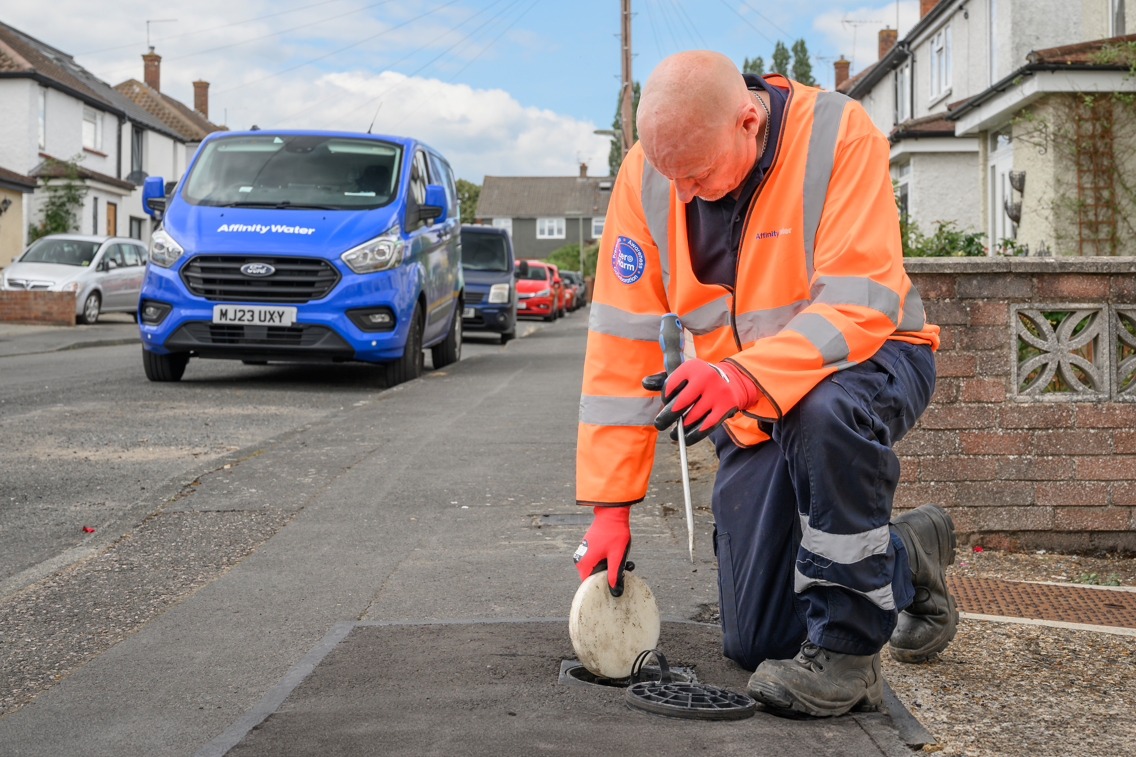
Anglian Water serves more than six million customers across one of the UK's driest regions. Maintaining water quality across a geographically dispersed network requires monitoring equipment to operate reliably in reservoirs, underground chambers and other hard-to-reach locations.
Many existing water quality sensors rely on cellular communications, which can struggle in underground environments due to poor signal strength, reinforced concrete structures and remote locations. This can lead to reduced monitoring frequency, increased maintenance requirements and delays in receiving critical operational data.
As the industry moves towards more proactive and data-driven operations, Anglian Water wanted to explore whether its existing smart metering network could support continuous water quality monitoring without the need for additional communications infrastructure.
Solution
Arqiva worked with Anglian Water to assess how its private smart metering network could be extended beyond metering and used to support chlorine monitoring sensors.
Six reservoir sites were selected for the trial. Chlorine sensors were connected directly to the existing private network, enabling readings to be captured every five minutes and transmitted every fifteen minutes.
Rather than deploying new communications infrastructure, the solution leveraged Anglian Water's existing smart water investment, creating a more efficient and scalable approach to monitoring.
The results
The trial demonstrated that a private smart water network can provide reliable, resilient connectivity for critical operational monitoring.
Immediate network connectivity
Connectivity was successfully established at every trial location, including sites where alternative communications approaches had previously presented challenges.
97%+ connectivity performance
Over the course of the trial, the solution achieved more than 97% connectivity with no data loss, demonstrating the network's ability to support dependable operational monitoring.
7x longer battery life
By using Arqiva's low-power network, the solution delivered a 700% improvement in battery performance compared with the previous cellular-based approach. This has the potential to reduce maintenance visits, operational costs and environmental impact
Near real-time visibility
The system enabled data transmission every 15 minutes compared with the previous approach of three transmissions per day, providing faster operational awareness and supporting more proactive decision-making.
Customer Impact
The trial proved that existing smart metering infrastructure can support multiple use cases beyond meter reading.
By combining smart metering and water quality monitoring on a single private network, Anglian Water can unlock greater value from its infrastructure investment while creating a scalable foundation for future sensor deployments and intelligent network applications.
Key Outcomes
97%+ connectivity
Reliable performance across all trial locations.
7x battery performance improvement
Reduced power consumption and maintenance requirements.
15-minute data transmission
Faster insight than traditional monitoring approaches.
No new network infrastructure required
Greater value from existing smart metering investments
Looking Ahead
This pioneering trial demonstrates how utilities can transform smart metering networks into intelligent operational platforms. By supporting near real-time water quality monitoring alongside metering, utilities can improve visibility, accelerate response times and build more resilient, data-driven water networks for the future.
Managed
Sensors
Transform your utility operations with intelligent monitoring that drives efficiency, compliance, and future-ready infrastructure.