The Government’s Missing Dimension
This article was originally published on the National Preparedness Commission website on 25 June 2026.
--------------------
It is often said that you don’t know what you’ve got until it’s gone – and there are few better examples of that than terrestrial TV. After all, if the UK were to lose internet connectivity and mobile networks during a national emergency, which communications system would still reach nearly every household?
This week, the UK Government published its Media Green Paper, setting out its approach to the long-term sustainability of the UK’s information ecosystem and public service media. While it advances the debate on the future of television distribution, it gives insufficient weight to the resilience role of terrestrial infrastructure and its wider strategic importance beyond consumer viewing.
The Green Paper focuses heavily on changing audience habits, the growth of online streaming services, spectrum efficiency and the long-term future of terrestrial TV, more commonly known as Freeview or Digital Terrestrial TV (DTT).
These are important issues, but they do not reflect the full strategic picture. In particular, the resilience function of terrestrial broadcast infrastructure – and its role beyond television – remains underdeveloped.
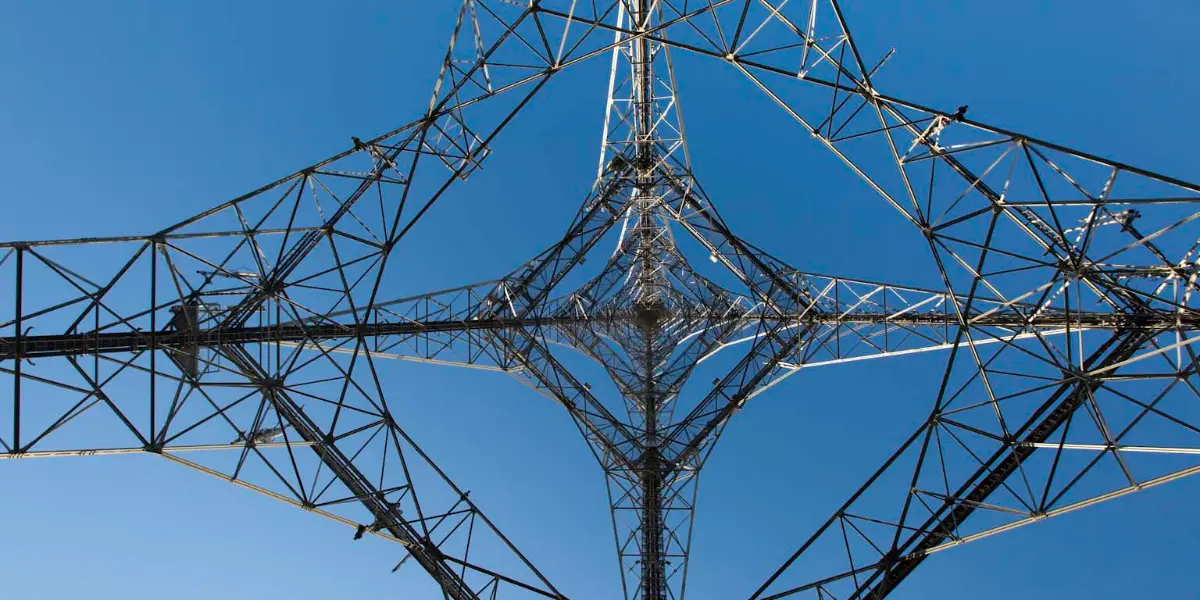
Terrestrial TV is more than just a way of watching television. It is a resilient, one-to-many communications system with near-universal reach, operating independently of consumer broadband and mobile data networks. While policy debate has focused on ‘pull’-based consumption, its strategic value to the state lies equally in its ability to ‘push’ trusted information reliably to the entire population. The wider terrestrial network also supports national and local radio services, as well as communications used by emergency and public-sector organisations, mobile network operators, transport systems and utilities.
Yet since the former BBC Director-General first suggested an end to terrestrial TV in 2022, the debate has been framed primarily as a question of broadcasting policy.
The Green Paper sets out two potential futures: extending terrestrial TV into the mid-2040s or switching it off entirely by 2034. The central issue is not whether technology will evolve or viewing habits will change – both are inevitable. It is whether the Green Paper fully reflects the role of this nationally distributed communications capability within the UK’s resilience and national security ecosystem.
A changing risk environment
At first glance, broadcasting policy may appear far removed from national security. In reality, it concerns the future of a nationally distributed communications platform that is uniquely designed to continue operating when other systems fail.
This is not a theoretical concern. The strategic environment facing the UK has changed significantly in recent years.
Russia’s invasion of Ukraine has reinforced the central importance of communications infrastructure during crisis while also demonstrating its vulnerability to disruption, interference and attack. Across Europe, GPS jamming and spoofing incidents have become increasingly common, affecting civilian aviation, maritime navigation and critical infrastructure systems. At the same time, cyber-attacks against governments, energy infrastructure, and major UK businesses – including M&S and Jaguar Land Rover – continue to increase in both frequency and sophistication.
Our changing risk environment highlights the need for government to communicate effectively with the public when normal conditions no longer apply. The UK’s preparedness framework rests on the premise that – in a crisis – the public must be warned quickly and kept reliably informed. This principle is embedded in the Civil Contingencies Act 2004 and reflected in Local Resilience Forums across the nation.
The Covid-19 pandemic demonstrated the importance of this capability in practice. During the first national lockdown in March 2020, more than 27 million people watched the Prime Minister’s televised address, making it one of the most viewed broadcasts in modern British history.
Yet this changing risk environment is only partially reflected in the Green Paper’s assessment of future communications infrastructure.
Shared infrastructure and increasing risk
The widely reported power outage across the Iberian Peninsula in 2025 demonstrated the immediate impact that electricity disruption can have on telecommunications and internet services, with mobile connectivity and data networks seriously impaired. Closer to home, the Heathrow substation fire illustrated how failure in one domain can quickly cascade into others when systems share common power and digital dependencies.
Satellite positioning and timing systems present another risk. UK Government analysis has estimated that just 24 hours of disruption to Global Navigation Satellite Systems (GNSS) could cost the UK economy £1.4 billion, as telecommunications networks, financial systems and energy infrastructure all depend on satellite-derived timing signals.
The issue is not simply whether individual systems are resilient, but whether too many critical functions depend on the same underlying technologies. As interconnection increases, so too does the risk of correlated failure.
This raises a fundamental question: when all else fails, which communication platforms remain capable of operating at national scale?
The resilience of existing broadcast transmission
The UK terrestrial broadcast network reaches approximately 98.5% of households through around 1,400 sites. It operates independently from consumer broadband and mobile data networks and distributes identical information simultaneously. Beyond terrestrial TV, the wider network supports DAB and FM radio services, communications used by over 300 emergency and public-sector organisations, mobile network operators, transport systems, government services and smart utilities.
While the Green Paper makes limited reference to the role of radio in resilience, it largely overlooks the wider ecosystem supported by terrestrial infrastructure – including emergency services, utilities, transport systems and other critical national functions. This omission risks understating both the scale of dependency on this infrastructure and the knock-on impact of a premature DTT switch off.
The network’s one-to-many architecture avoids congestion when audiences increase and provides near-universal reach without reliance on subscriptions, household broadband or mobile data access. Many sites also benefit from backup power arrangements, enabling the continued provision of critical information during disruption.
The network’s resilience characteristics extend beyond reach and scale. It is a core component of an integrated resilience system. Emergency Alerts provide rapid initial warning, while broadcast provides sustained communication, context and locally relevant updates over extended periods. Together, they support the full warning and informing cycle.
Importantly, these capabilities are underpinned by resilience measures including continuity planning, backup power and operational reliability. These characteristics do not make broadcast infrastructure superior to other forms of communication, but they do provide a distinct and complementary set of capabilities that enhance overall system resilience.
Broadcast infrastructure and the risk of reduced communications diversity
A transition from broadcast to fully IP-based internet delivery would increase dependence on networks that share common requirements for power, connectivity, routers, access networks and data infrastructure. This does not mean that a long-term transition is inherently wrong. It does, however, mean that the resilience implications require explicit assessment and that the UK should avoid moving prematurely to a model that introduces avoidable systemic risks.
IP streaming is broadly reliable in normal conditions, but it depends on broadband or data connectivity, functioning routers, stable electricity supply and resilient networks. Its resilience under large-scale disruption has not been publicly demonstrated.
Any technological transition affecting universal communications must include a formal resilience assessment. Decisions to end the terrestrial TV network should not be taken in the absence of a clear assessment of the implications for national resilience, emergency communications, and public warning and informing.
This is particularly important because terrestrial broadcast is not systematically reflected in national resilience planning, a gap that is also evident in the Green Paper’s treatment of the issue. It is relied upon in practice – for example through the ‘Go In, Stay In, Tune In’ response advice – but is not consistently embedded within national risk assessments, communications failure planning assumptions or wider discussions concerning critical national infrastructure.
Recommendations
The Media Green Paper highlights an important debate but does not fully address the resilience implications of the choices it sets out. This gap must now be addressed. To strengthen national preparedness, and to secure the long-term sustainability of the UK’s information ecosystem, the following actions are necessary:
1. Extend Terrestrial TV until 2044
Extending terrestrial TV to 2044 safeguards universal access to trusted information, preserves diversity within the UK’s communication ecosystem and enables the full defence, security and sovereignty value of the terrestrial network to be properly assessed.
2. Formal recognition and utilisation in national resilience doctrine
The Cabinet Office should ensure that terrestrial broadcast transmission is explicitly incorporated within communications resilience planning and National Risk Register assessments. This should include a clear assessment of how this infrastructure can be fully leveraged to support wider resilience objectives across public services.
3. Resilience impact assessment for communications changes
The Department for Culture, Media and Sport, with Ofcom input, should require resilience impact assessments for any material reduction in terrestrial broadcast infrastructure capacity.
4. Alignment with Position, Navigation and Timing (PNT) resilience strategy
Given the economic risks associated with GNSS disruption, government should examine whether nationally distributed and geographically strategic terrestrial infrastructure could support a backup timing capability or sovereign eLORAN.
Views

How we keep our people safe and our customers supported in storm season

Women in Engineering Day 2019

Empowering tomorrow’s industry experts: Arqiva Apprenticeships today